
Washing duvets and blankets is different from washing ordinary laundry. Even if these items feel light when dry, they take up a lot of space in the drum; they become heavy once they absorb water, and incorrect loading can lead to an unbalanced wash process.
From the customer's point of view the expectation is clear: the item must be cleaned, rinsed well, its filling must be preserved and it must be returned ready for use. For the business providing the service, machine capacity, programme selection, spin balance, drying method, delivery time and cost per job all have to be managed together.
A well-planned duvet and blanket washing machine gives the business the opportunity to set up a separate service line that can win new customers and generate regular income over time.
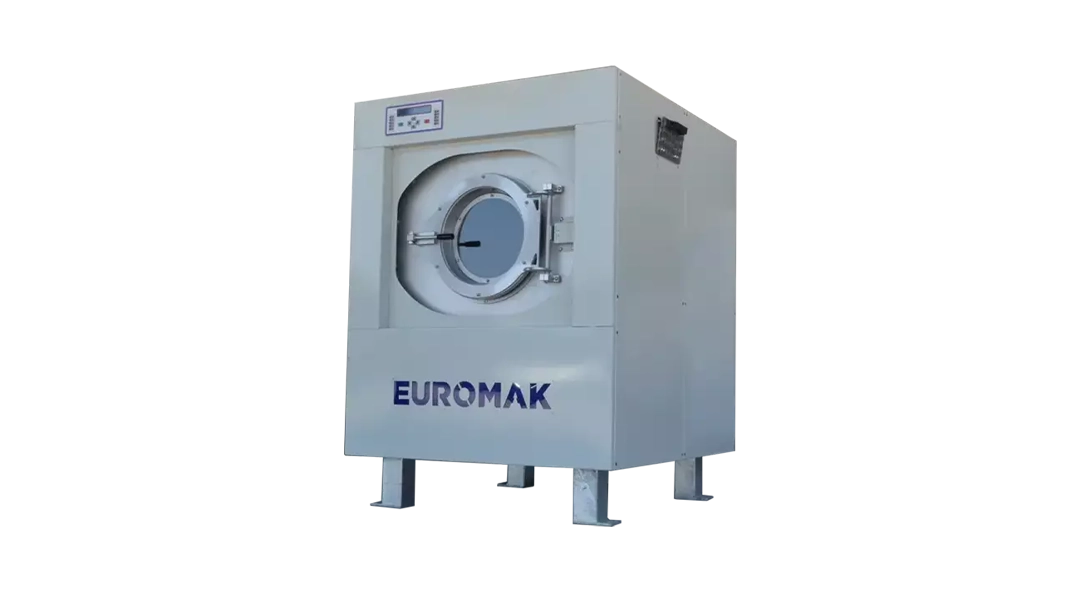
Bulky textiles need a different wash
The main challenge with duvets and blankets is not only their weight. The item's volume, filling material, fabric structure and water absorption all change how it behaves in the wash.
- Water and detergent not reaching the item evenly
- Soil and detergent residues not being removed sufficiently
- Reduced rinsing performance
- The item being spun unevenly
- Clumping of the filling material
- Longer drying times
These problems can appear when the machine is overloaded. The aim is not to fit as many items as possible into the drum, but to create the right load in which the textiles can move in a controlled way.
What 30 kg capacity adds to the service
A 30 kg capacity gives a duvet and blanket washing service the advantage of processing several items in a single cycle. Depending on the volume and dry weight of the items, roughly 2 to 4 duvets or blankets can be washed together under suitable loading conditions. This capacity helps process more orders in a planned way during busy periods, shortening customer waiting times and increasing daily service capacity.
Turning seasonal demand into regular income
Demand for duvet and blanket washing rises especially at the change of seasons. Washing winter items before use, or cleaning them at the end of the season before storing them, creates distinct peak periods.
The service is not limited to spring and autumn. Duvets, blankets, bedspreads, mattress protectors, suitable sleeping bags and hospitality textiles can be processed all year round. Agreements with hotels, guesthouses, student dormitories, rental property managers and accommodation businesses can make demand more balanced.
Estimating daily capacity
Before making an investment decision, the daily processing capacity should be estimated approximately.
Machine capacity × daily number of cycles × average load factor = theoretical daily dry textile capacity
30 kg × 6 cycles × 80 percent load = 144 kg theoretical daily capacity
This calculation does not mean that 144 kilograms of items will be processed under all conditions. With bulky textiles, drum volume is often the deciding factor before the kilogram limit. Programme time, item type, loading speed and drying capacity also change daily output. The method can be used to compare low, medium and peak season scenarios.
Calculating the return on investment
The value the machine brings to the business should not be judged on daily turnover alone. What matters is the contribution left after water, energy, chemicals, staff, packaging, delivery, maintenance and drying costs.
Service selling price − variable cost per job = contribution per job
Monthly number of jobs × contribution per job = total monthly contribution
Total investment amount ÷ total monthly contribution = estimated payback period
For example, if a business receives an average of 12 orders a day and works 26 days a month, its monthly order volume is 312. The contribution of these orders should be calculated using the local service price and the actual processing cost. This way, not only the price of the machine but also the work and contribution it can generate each month are evaluated.
Once the investment cost has been recovered, the machine can become one of the income-generating production assets as long as there are enough orders. The payback period and profitability depend on order volume, local prices, the mix of items and operating costs.
Operations that determine profitability
Washing a large number of items does not always mean high profit. Profitability depends on how consistently the work is carried out.
- Grouping similar items into suitable loads
- Not running the machine with partial loads all the time
- Selecting the programme according to the care label
- Standardising detergent dosing
- Reducing quality errors that require rewashing
- Balancing washing and drying capacity
- Planning pick-up routes
- Managing orders with a labelling and tracking system
When the desired result is not achieved in the first wash, the same item uses water, energy, chemicals, staff time and machine capacity a second time. That is why the quality standard affects not only customer satisfaction but also operating costs.
Why drying capacity matters
Duvets and blankets can hold a large amount of moisture. If the drying area or drying equipment is not planned to the same extent as washing capacity is increased, clean items cannot be prepared for delivery on time.
- Items piling up in the processing area
- Longer delivery times
- Insufficient drying and odour formation
- A growing need for reprocessing
For this reason, when evaluating a 30 kg machine, the drying machine, natural drying area, ventilation, humidity control and the holding arrangement for items should also be taken into account.
Questions to ask when choosing a machine
- Is the 30 kg capacity stated on a dry-load basis?
- Is the drum volume sufficient for bulky textiles?
- Can programmes suitable for duvets and blankets be created?
- How is balance controlled during spinning?
- What are the programme time and daily cycle capacity?
- How much water and energy is consumed per kilogram?
- Can a detergent dosing system be used?
- Are the maintenance points easy to access?
- How are technical service and spare parts support provided?
- Is the drying system suited to the daily washing capacity?
An income-generating service line
An investment in a duvet and blanket washing machine, combined with the right customer base and consistent operations, can give the business a new source of income. A 30 kg capacity can be a significant advantage for processing bulky textiles under professional conditions, planning daily orders and responding to higher workloads in busy periods.
Real earnings come not only from capacity but from correct loading, the right programme, balanced drying, effective marketing and controlled cost management. A service line that reaches sufficient order volume can first recover the investment cost and then contribute to the business's profitability.
Plan the right investment with Euromak
Share your daily textile load and capacity target to evaluate the right industrial washing machine for your business together with the Euromak team.


